If you’ve recently noticed the little wireless symbol on your credit or debit card — it looks like a sideways Wi-Fi icon — your card supports contactless payment. That means it uses a technology called RFID (Radio Frequency Identification) or its close cousin NFC (Near Field Communication) to transmit your card data wirelessly when you tap to pay. The convenience is real. But so is a question a lot of people ask: could someone with a reader device skim that data out of your pocket without you knowing? That concern is what the entire RFID-blocking wallet and card market is built around. This guide will walk you through how the threat actually works, what shielding does and doesn’t do, how to read the specs that matter, and which product formats make sense depending on your situation.
The Threat Is Real — But Smaller Than the Marketing Suggests
Let’s start with honest context, because the marketing around RFID wallets has historically outpaced the documented threat.
The FCC’s Radio Frequency Safety overview notes that RFID and NFC systems operate at very short ranges by design — payment-grade NFC (ISO/IEC 14443) is standardized to work reliably at under 4 centimeters (about 1.5 inches). The NFC Forum’s NFC Technology Overview confirms that practical read range for passive payment cards maxes out around 10 cm under ideal lab antenna conditions — and falls well below that in a real-world scenario with a wallet, clothing, and body mass between card and reader.
Security researchers at universities including the University of Surrey and teams cited in NIST’s Guidelines for Securing RFID Systems (SP 800-98) have demonstrated that purpose-built long-range readers can sometimes push those limits. But demonstrated real-world card-skimming attacks — where a criminal successfully charges a card by brushing past someone in public — remain rare in published incident data. The major card networks (Visa, Mastercard) also build in tokenization: the number transmitted wirelessly during a tap-to-pay transaction is not your static card number, and a replayed token typically fails on the second use.
So why buy RFID protection at all? Three legitimate reasons persist:
- Credential cards matter more than payment cards. Corporate access badges, government IDs, and transit cards often use older RFID protocols (125 kHz EM4100, 13.56 MHz MIFARE Classic) that are far more vulnerable than modern payment NFC. These are worth shielding.
- Layered privacy posture. Privacy-conscious individuals may prefer to eliminate even a theoretical intercept vector, especially in high-density travel environments.
- Peace of mind has real value. If you spend cognitive energy worrying about this, a $15–$35 shielded wallet is a cheap resolution — as long as it actually works.
How RFID Blocking Actually Works (and What the Specs Mean)
An RFID-blocking wallet or card sleeve works through Faraday shielding — a conductive layer (usually aluminum mesh, carbon fiber weave, or metallized fabric) that attenuates incoming and outgoing RF signals by reflecting or absorbing them rather than letting them pass. The same principle, scaled up significantly, underlies the enterprise Faraday bags and room-shielding products covered elsewhere on this site.
The key spec you want to see: attenuation in dB at the relevant frequency.
Payment cards and access credentials operate on two main frequency bands:
| Frequency | Common Use Case | Target Attenuation |
|---|---|---|
| 125 kHz (LF) | Legacy access badges, older key fobs | ≥ 30 dB recommended |
| 13.56 MHz (HF/NFC) | Payment cards, passports, transit cards | ≥ 30–40 dB recommended |
A product claiming “RFID blocking” without publishing a dB spec at a named frequency is giving you marketing language, not a performance claim. Per published guidance from lessemf.com’s shielding materials documentation, a 30 dB attenuation means the signal strength is reduced to about 1/1000th of its original power. At 40 dB, you’re at 1/10,000th. Most legitimate shielded wallets targeting payment card frequencies publish attenuation specs of 30–60 dB at 13.56 MHz; the better-made products from brands like Bellroy, Ekster, and Dango publish datasheets or reference independent lab testing.
What counts as independent certification? Look for:
- CE or FCC Part 15 testing (mostly relevant to active device bags, less so passive wallets)
- ISO 11784/11785 or ISO 14443 attenuation testing referenced in product specs
- Third-party lab reports (SGS, Intertek, TÜV are the names that recur in credible product documentation)
If a wallet’s product page lists no frequency, no dB figure, and no lab name — that’s a flag worth noting before you buy.
Product Formats: Wallets vs. Sleeves vs. Cards
Three formats dominate the market, and they solve slightly different problems.
RFID-Blocking Wallets ($15–$80)
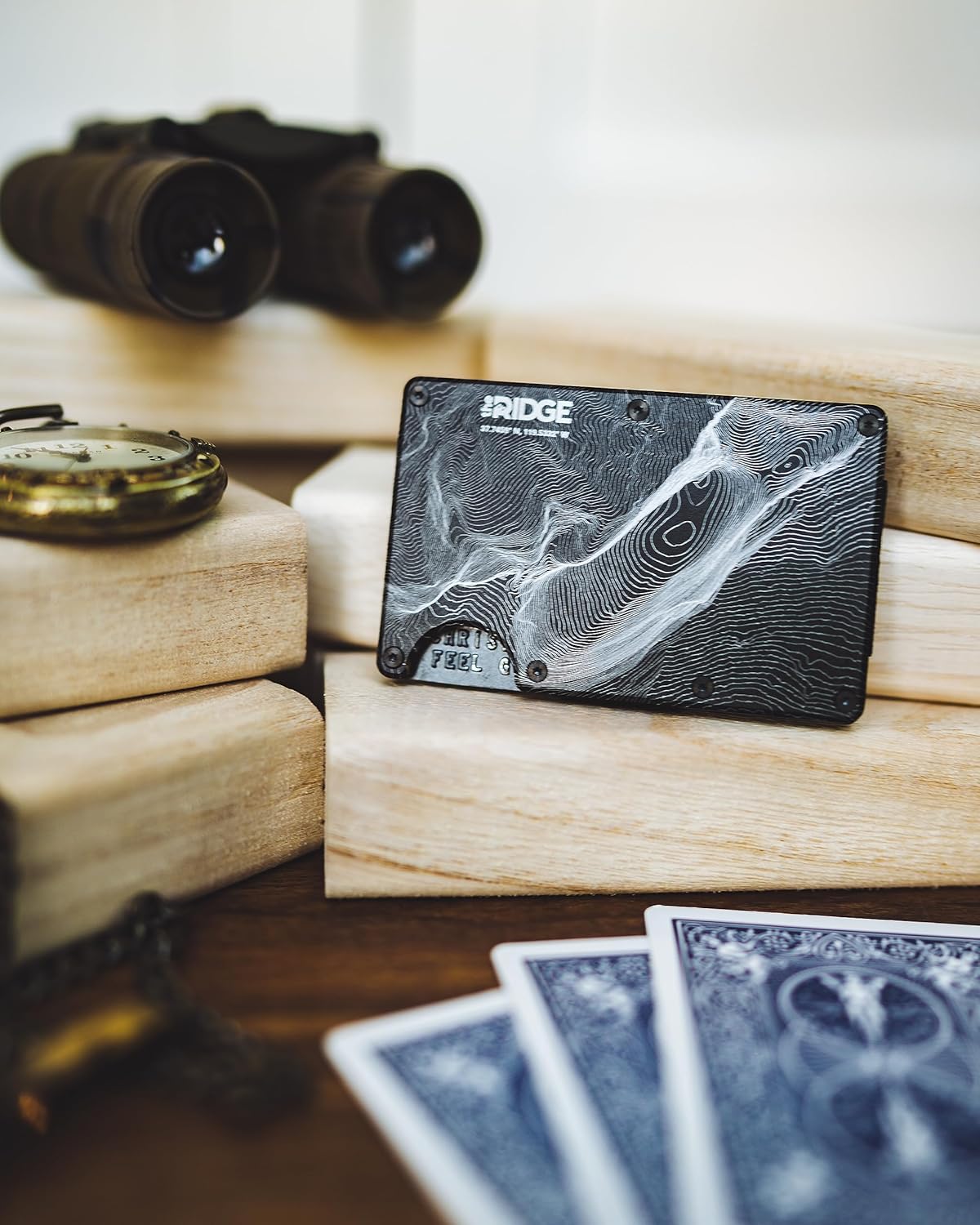
The most common format. A shielded wallet typically lines the card slots with an aluminum or metallized-fabric layer that passively blocks signals when cards are seated inside. At the $15–$35 tier, you’re mostly getting folded aluminum laminate — functional but not always independently tested. At $40–$80 (Bellroy, Ekster, Dango), published specs become more common and build quality is meaningfully better.
Who this is for: Anyone who wants a single-purchase, carry-everything solution and doesn’t want to think about it daily. Good for payment cards and access badges alike.
Tradeoff to name explicitly: A shielded wallet still requires you to remove the card to tap. That’s the physics — you’re shielding it specifically so it can’t transmit while stored. Users who tap frequently at transit gates sometimes find this friction annoying enough that they leave cards outside the shield, defeating the purpose.
RFID-Blocking Sleeves ($5–$20 per sleeve)
Individual card-sized sleeves, usually sold in packs. Most are aluminum foil laminate inside a paper or Tyvek shell. Performance varies widely; the better ones from brands like Identity Stronghold cite 13.56 MHz blocking in their product specs. Wirecutter’s wallets coverage (New York Times, wirecutter.com) has noted that sleeves work well for specific high-value cards — a passport, a building access card — without requiring you to swap your entire wallet.
Who this is for: Someone who wants targeted protection for one or two specific cards (especially a government ID or an access badge) without changing wallets. Also a good solution for older RFID-chipped passports.
Tradeoff: Sleeves add bulk per card. If you carry eight cards, eight sleeves become uncomfortable fast.
RFID-Blocking “Cards” ($20–$40)
A newer format: a card the same dimensions as a credit card that you slot into your wallet alongside your real cards. It broadcasts a jamming or interference signal — or more commonly, acts as a passive blocking layer — to protect adjacent cards. Brands like Armored Wallet and RFID Card Shield market these.
Who this is for: People who don’t want to change wallets or add sleeves but want incremental protection. The least disruptive upgrade.
Tradeoff and important caveat: Published independent attenuation data for this format is harder to find than for dedicated shielded wallets. The claim that a single card creates an effective Faraday enclosure around other cards is physically less robust than surrounding cards with a lined wallet. Look hard for a dB spec before buying in this category. If the product page won’t show you one, treat the claim with skepticism.
Decision Frame: If X, Then Y
Here’s where the spec-awareness pays off as a practical decision rule.
If your primary concern is contactless payment cards (Visa, Mastercard, Amex tap-to-pay): The documented real-world risk is low enough that any legitimate shielded wallet at $20+ with a published 13.56 MHz blocking claim provides reasonable protection. Focus your scrutiny on build quality and daily usability — a wallet you actually use closed is infinitely better than a premium shielded wallet you keep open for tap convenience.
If your primary concern is a corporate access badge or government ID: These use older, more vulnerable RFID protocols. Prioritize a wallet or sleeve that explicitly cites 125 kHz blocking in addition to 13.56 MHz — and look for a named lab test. Identity Stronghold and Armored Wallet both publish frequency-specific claims worth verifying against their datasheets.
If you travel frequently with an RFID-chipped passport (the biometric kind — look for the chip symbol on the cover): A passport sleeve or travel wallet with documented 13.56 MHz blocking is a legitimate, low-cost addition to your travel kit. The U.S. State Department’s own guidance on e-passport security acknowledges that the passport’s built-in basic access control (BAC) encryption is the primary defense — but a sleeve adds a physical layer at minimal cost.
If you’re evaluating this for enterprise or fleet use (issuing shielded wallets to employees who carry access credentials): Move up to products from Faraday Defense, Mission Darkness, or DefenderShield that publish ISO-tested attenuation specs with lab documentation. At that procurement scale, a dB datasheet and a named certifying lab are non-negotiable, not a bonus feature.
A Quick Sanity Check Before You Buy
By the numbers — what to verify on any RFID-blocking product page:
- Frequency covered: Look for 125 kHz AND 13.56 MHz stated explicitly
- Attenuation figure: ≥ 30 dB at target frequency is the baseline; ≥ 40 dB is better
- Lab name or certification: SGS, Intertek, TÜV, or a named university test
- Return window: A 30-day return policy is a soft signal that the seller stands behind the performance claim
If a wallet’s listing checks all four boxes, you have enough information to buy with confidence. If it checks none of them, you’re paying for marketing copy.
The threat that RFID-blocking products address is real but calibrated — not every card, not every environment, not every day. What the right shielded wallet or sleeve actually gives you is a small, permanent reduction in a real (if unlikely) exposure vector, wrapped in a product you’ll carry anyway. That’s a reasonable trade at most price points, as long as the spec is honest and the certification is real.
Pricing ranges reflect May 2026 market conditions across major U.S. retail channels. Published attenuation specs change with product revisions; always verify the current datasheet before purchase.