If you’ve been searching “EMF belly band for pregnancy” and landed here wondering whether these products actually do anything — or which one is worth your money — this guide is for you. “EMF” stands for electromagnetic fields, a broad term for the invisible energy waves that radiate from everyday devices: your phone, your laptop, your Wi-Fi router. “RF” (radiofrequency) is the specific slice of that spectrum that phones and wireless devices emit. An EMF-shielding belly band is a stretchy, wearable garment — similar to the support bands many pregnant people already wear — except it’s woven with metallic fibers (usually silver or a silver-copper blend) designed to deflect a portion of those RF waves away from your abdomen. Whether or not you’re convinced the exposure level matters, many expectant parents want the option to reduce it, and a growing product category now exists to serve that need. This guide breaks down what the fabrics are actually rated to do, what the published specs mean in plain language, and how these garments hold up after weeks of actual wear and washing.
What “dB Attenuation” Actually Means on a Belly Band Label
Before comparing products, it’s worth understanding the one number that matters most on any shielding garment’s label: decibels of attenuation, written as “dB.” Attenuation simply means reduction — how much of an incoming RF signal the fabric blocks before it reaches the other side. The decibel scale is logarithmic, which sounds complicated, but the practical translation is straightforward:
By the numbers:
- 10 dB attenuation ≈ 90% of RF signal blocked
- 20 dB attenuation ≈ 99% of RF signal blocked
- 30 dB attenuation ≈ 99.9% of RF signal blocked
- 40+ dB attenuation ≈ 99.99% blocked (approaching Faraday-level performance)
Most consumer-grade shielding belly bands publish specs in the 20–30 dB range for frequencies between 750 MHz and 10 GHz — the range that covers 4G LTE and most Wi-Fi and 5G sub-6 GHz signals. A few premium garments claim ratings up to 35–45 dB, but those numbers require scrutiny: are they from an independent lab, or from the manufacturer’s own bench testing? That distinction is the single most important question you can ask before buying.
The Building Biology Institute publishes its Standard of Building Biology Testing Methods (SBM-2015), available through buildingbiology.net, which offers a framework building biologists use when advising clients on protective measures — including wearables. It’s worth knowing that framework exists even if the belly band you’re evaluating hasn’t been tested against it specifically.
The FCC’s radiofrequency safety guidance, published on fcc.gov, sets the regulatory baseline for RF exposure in the United States. The agency does not endorse specific shielding garments, but its published exposure limits give useful context for understanding how much signal is present in everyday environments. Similarly, the World Health Organization’s fact sheet “Electromagnetic Fields and Public Health: Mobile Phones,” published on who.int, notes that research on low-level RF exposure is ongoing — meaning the regulatory framing here is “precaution if desired,” not “medically proven necessity.”
The Three Fabrics You’ll Encounter — and What They Trade Off
Virtually every shielding belly band on the market uses one of three base fabric technologies. Understanding them helps you read between the lines of marketing copy.
Silver-Fiber Knit
This is the most common construction. Thin silver filaments are woven or knitted into a polyester or nylon base. Silver is an excellent conductor, which is what makes it effective at redirecting RF waves. This fabric type dominates the retail-ready belly band market and is the foundation of the most widely reviewed products in the category.
Tradeoff: Silver-fiber garments lose shielding effectiveness with aggressive washing. Silver tarnishes, and the conductive threads can break over repeated machine-wash cycles. Most manufacturers recommend hand-washing in cold water or a delicate machine cycle with no bleach, no fabric softener, and air drying. Reviewers across aggregated buyer feedback consistently flag that following care instructions precisely is non-negotiable — owners who machine-wash on normal cycles report noticeable changes in the fabric’s feel within 10–15 washes, suggesting potential fiber damage.
Silver-Copper Blend Fabric
A step up in conductivity, silver-copper blend fabrics appear in some higher-end options and in raw shielding fabric sold by specialist suppliers. Less EMF Inc., whose fabric specifications are published on lessemf.com, documents copper-silver fabric options that can achieve attenuation ratings in the 40–50 dB range at specific frequencies — significantly higher than single-metal options. The tradeoff is comfort and washability: copper-blended fabrics can feel stiffer and are generally more wash-sensitive than pure silver knits.
This fabric type is more common in panel form — sewn into a garment by a tailor or fabricator — than in retail-ready belly bands. If you’re working with a building-biology consultant to create a custom maternity garment, this is the specification-grade option to reference.
Swiss Shield and Proprietary Blends
A small number of brands use proprietary fabric formulations — sometimes marketed under names like “Swiss Shield” or branded material names — that combine polyester, cotton, and metallic fibers for improved drape and breathability. These can offer a better wearing experience across the full arc of a pregnancy, but published dB specs are sometimes harder to find. If a product in this category cannot point you to an independent lab report with frequency-specific attenuation data, treat the marketing claims skeptically.
Head-to-Head: Four Products Worth Evaluating
The comparison below is organized by tier. For each product, the critical question is the same: can the brand produce an independent, accredited-lab dB rating for the specific frequencies relevant to everyday RF exposure?
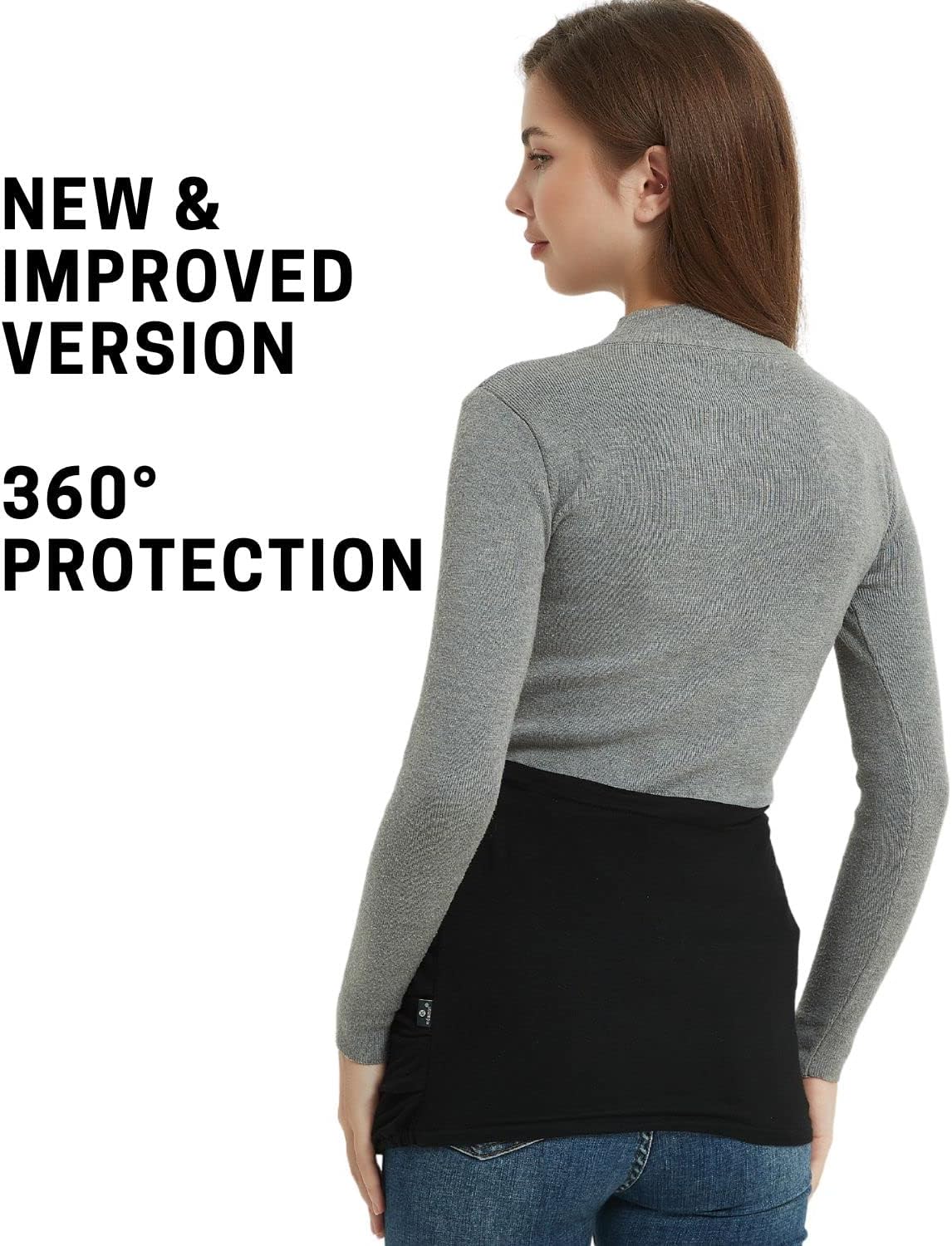
DefenderShield EMF-Blocking Belly Band
Published spec: DefenderShield states on its product datasheet and certification summary (available on DefenderShield.com) that its belly band has been tested by a third-party FCC-accredited laboratory, with attenuation figures covering 750 MHz through 10 GHz. The specific dB results are listed in that documentation.
Fabric: Silver-fiber knit over a stretchy base layer.
Price range (as of May 2026): Approximately $80–$120 depending on configuration.
Wash durability: Care instructions specify hand wash or delicate machine cycle, cold water, air dry — no bleach, no softener. Owners report the garment holds its shape and function well when instructions are followed; several note washing it 20 or more times without visible degradation under those conditions. Some users flag that the band runs warm in summer months, worth factoring in for warm climates or late-pregnancy wear.
Who this is for: First-time buyers who want the confidence of independent lab certification and a recognizable brand with an auditable certification trail.
Radia
$89.95
In stock on Amazon
Check price on AmazonSilver Shield Maternity Belly Band
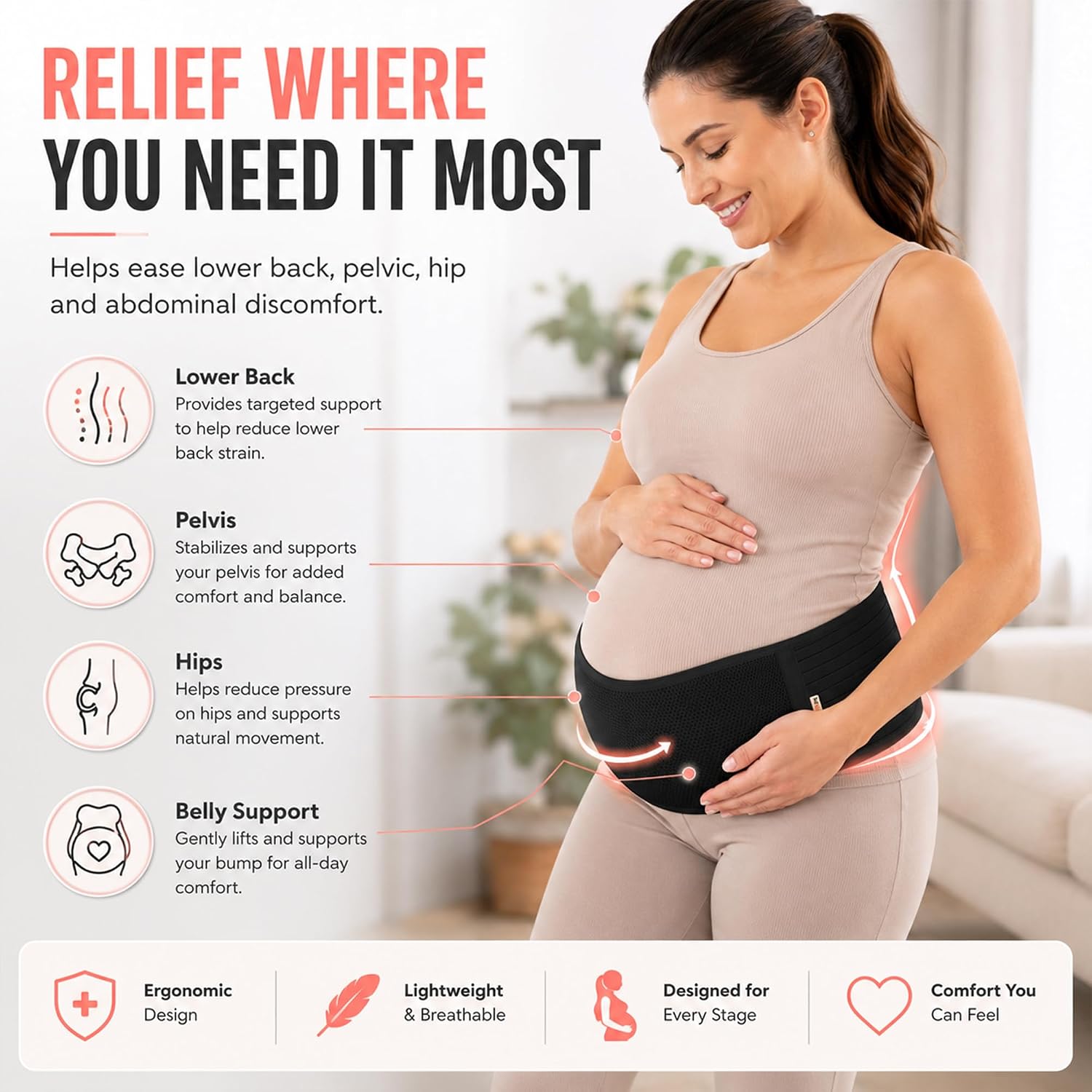
Published spec: Silver Shield publishes attenuation data on its product pages, though the sourcing of the lab testing is less explicitly documented than DefenderShield’s. Before purchasing, confirm that an accredited lab name is attached to the cited figures — not just a dB number without a testing source.
Fabric: Silver-fiber blend with a softer hand feel than some competitors.
Price range: Approximately $60–$95.
Wash durability: Similar care requirements to other silver-fiber products. Owners generally report satisfactory durability when hand-washed, but the brand’s customer support documentation on wash-cycle performance is thinner than DefenderShield’s.
Who this is for: Budget-conscious buyers who want silver-fiber protection and are comfortable doing a bit more independent due diligence on the lab certification question. If the brand confirms an accredited third-party lab, this is a solid value for the price.
AZMED
$19.99
In stock on Amazon
Check price on AmazonLess EMF Belly Band and Custom Fabric Options
Published spec: Less EMF Inc. publishes detailed fabric attenuation specifications on lessemf.com, including frequency-by-frequency performance tables for multiple fabric types. Their shielding fabrics are among the most transparently documented options available to direct-to-consumer buyers and trade clients alike.
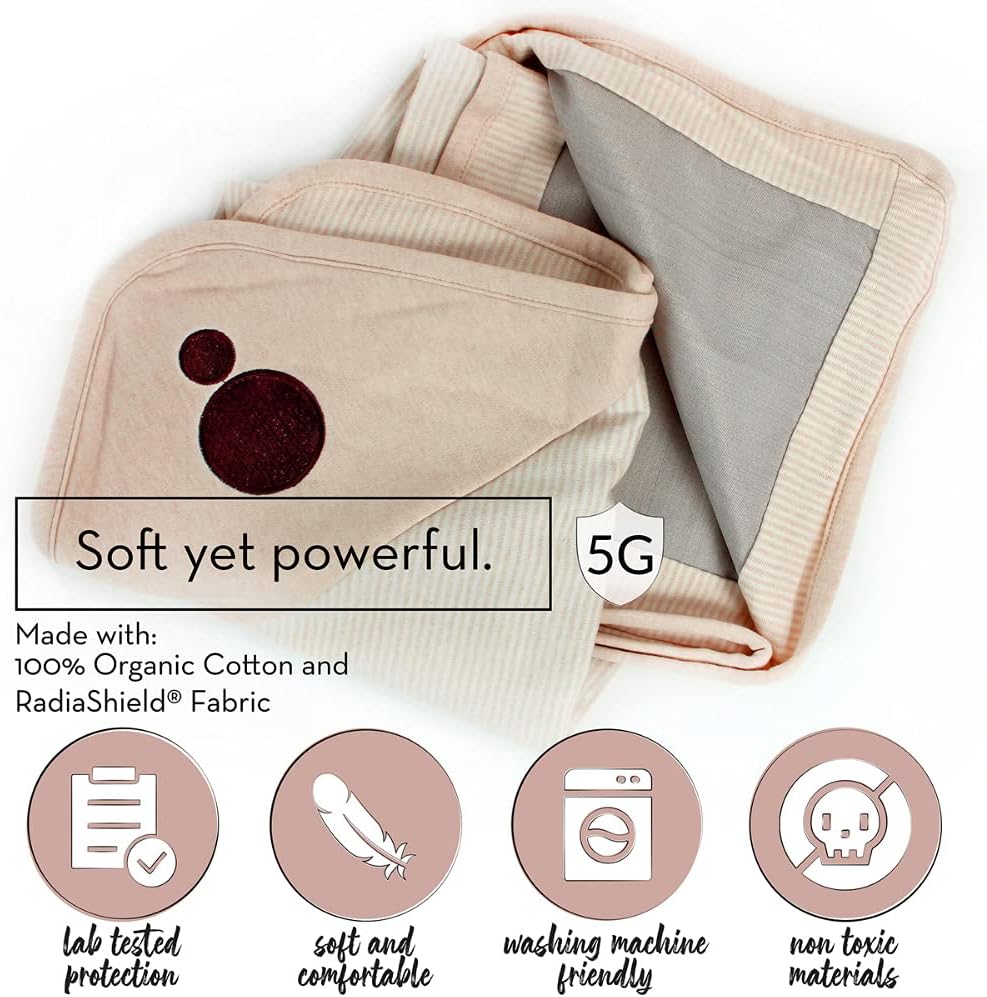
Fabric: Multiple options, including silver-nylon knit and copper-blend panels, with documented wash ratings per specific fabric SKU.
Price range: Fabric is sold by the yard or meter; finished garments or kits vary. Expect $40–$80 for a DIY approach, higher for pre-made options. The Building Biology Institute’s professional network, listed on buildingbiology.net, includes consultants who can advise on garment construction and shielding verification if you want third-party guidance through the process.
Wash durability: Documented per product on the Less EMF site; buyers should review the specific fabric’s wash rating before purchasing.
Who this is for: DIY-inclined buyers, tailors, or clients working with building-biology consultants who want maximum specification transparency and are willing to assemble or commission a garment. This is also the right path for anyone who needs a custom fit or the highest raw attenuation rating available in consumer-grade fabric.
Belly
$105.00
In stock on Amazon
Check price on AmazonGeneric / Unbranded “EMF Maternity Band” — What to Avoid
A significant portion of the market at the $15–$40 price point consists of products with no published dB specs, no named independent lab, and no traceable certification. They may contain metallic-looking fabric, but “looks shielding” is not a specification.
Per this site’s editorial standard: if a product publishes no independent dB rating from a named accredited lab, flag it and move on. The risk isn’t that it’s dangerous — it’s that you have no basis for knowing whether it does anything at all. The category has enough legitimate, well-documented options that there’s no reason to guess.
AZMED
$19.99
In stock on Amazon
Check price on AmazonThe Wash-Durability Decision Frame
Here’s where most buyers underestimate the real cost of ownership. A belly band worn daily through pregnancy gets washed frequently. Shielding fabrics are inherently more delicate than standard sportswear. Before buying, ask three questions:
-
Does the brand publish a wash-cycle durability rating? Some do — often 30–50 washes at rated spec performance. Many don’t. If the documentation is silent on this point, factor in that the published dB rating may degrade faster than you’d expect.
-
Does the care label require hand washing? If you won’t realistically hand-wash a garment every few days for months, factor in that machine washing may degrade performance over time, regardless of what the label says to do.
-
Is there a replacement or warranty policy? Verify current warranty terms directly with any brand at time of purchase — policies change, and what’s listed in third-party reviews may be outdated.
The International Commission on Non-Ionizing Radiation Protection’s 2020 guidelines — formally titled “Guidelines for Limiting Exposure to Electromagnetic Fields (100 kHz–300 GHz)” and published by ICNIRP — remain the international scientific reference point for RF safety limits. Understanding those limits helps calibrate how much attenuation is meaningful in real-world conditions rather than treating any higher dB number as automatically better.
If X, Then Y: The Decision Rules
- If you want the clearest independent lab documentation and can spend $80–$120: DefenderShield is the straightforward choice. The certification trail is the most auditable in the category.
- If budget is the primary constraint and you’re willing to verify lab credentials yourself: The Silver Shield band in the $60–$95 range is worth a closer look — but confirm the lab name before purchasing.
- If you need a custom fit, want the highest raw attenuation rating, or are working with a consultant: Start with Less EMF’s fabric specifications on lessemf.com and either commission a garment or build your own.
- If a product at any price point cannot show you an independent dB rating from a named accredited lab: Skip it.
The math on decibels is honest: 20 dB means 99% attenuation, and an independent lab either confirms that or it doesn’t. Ask for the report before you buy.