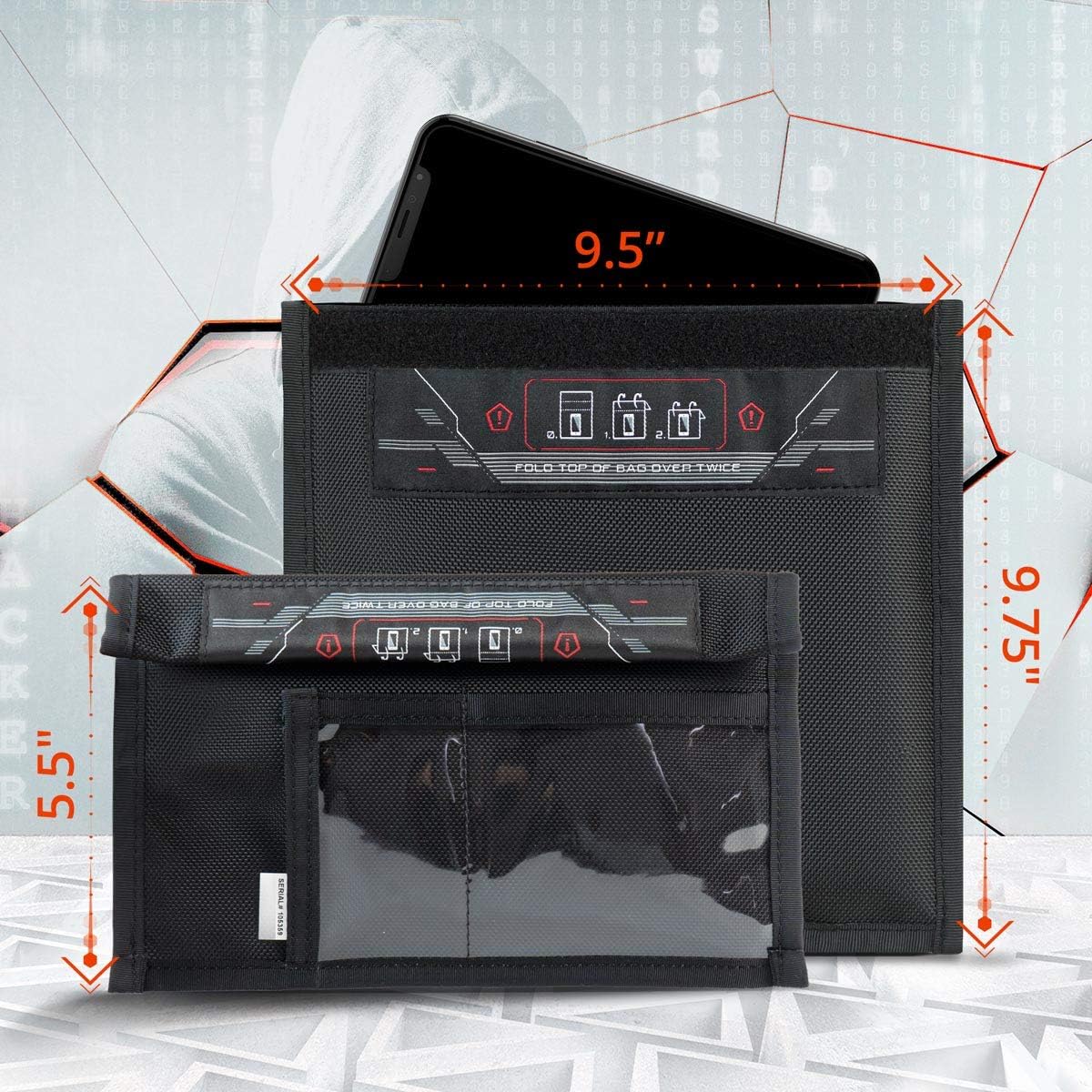
A Faraday bag is exactly what it sounds like: a sealed pouch lined with conductive shielding material that blocks radio-frequency (RF) signals from getting in or out. Named after 19th-century physicist Michael Faraday, who demonstrated that a conductive enclosure can cancel external electromagnetic fields, today’s versions are used by digital forensics investigators to preserve evidence on seized phones, by IT security teams isolating devices from remote-wipe commands, and by preparedness-minded buyers protecting electronics against an electromagnetic pulse (EMP) — a surge of electromagnetic energy, natural (solar flare) or man-made, capable of disabling unprotected circuits. This guide covers the premium tier specifically: bags rated, certified, or designed for forensics chain-of-custody workflows and EMP scenarios. By the end, you’ll know what separates a $25 phone pouch from a $150 forensics enclosure, which published specs to demand, and a clear if-X-then-Y decision rule for your situation.
Why “Military-Grade” Needs a Definition (and a Datasheet)
The phrase “military-grade” appears on products ranging from $8 pouches sold in bulk lots to $300 forensics kits used by law-enforcement agencies. It has no standardized regulatory meaning in the consumer market, which means your job as a buyer is to look past the label and find three things:
1. A published dB attenuation figure across a stated frequency range. Attenuation (measured in decibels, or dB) is how much signal the bag blocks. A 40 dB rating means it reduces signal power by 99.99%; 60 dB means 99.9999%. For forensics use — where the goal is preventing a remote wipe or preserving volatile data — the NIST Special Publication 800-101 Rev. 1 (Guidelines on Mobile Device Forensics, National Institute of Standards and Technology) recommends isolation that achieves complete signal blocking across all relevant bands: cellular (700 MHz–2.1 GHz), Wi-Fi (2.4 GHz and 5 GHz), Bluetooth (2.4 GHz), and GPS (1.575 GHz). That typically requires ≥60 dB across those bands.
2. Independent lab verification, not self-reported testing. A manufacturer can publish any number they want on a spec sheet. What separates the forensics-grade tier is third-party lab certification — ideally from an accredited RF test lab using standardized measurement protocols. Look for explicit mention of the lab name, the test standard (MIL-STD-461, IEEE 299, or equivalent), and the date of the report.
3. Closure integrity under field conditions. A bag that achieves 80 dB in a flat-panel lab test but drops to 30 dB when the roll-top seal is loosely closed is not a forensics bag — it’s a marketing exercise. High-end bags address this with double-roll closures, conductive gaskets, or secondary zipper shields. This is where the premium pricing is often actually justified.
The Contenders: Published Specs and What They Mean
Mission Darkness — The Category Default
Mission Darkness, produced by TechProtectBag, is the closest thing the forensics market has to a default choice. Their full product line spans basic RF-blocking pouches (roughly $25–$40) up to the Faraday cage bags designed for tablet and laptop-sized devices ($80–$150+), with the forensics-optimized variants in the $100–$200 range depending on size.
Published attenuation: Mission Darkness publishes test results showing ≥85 dB attenuation from 10 MHz to 3 GHz for their higher-tier forensics bags, with their TitanRF Fabric (the shielding material in their pro-line bags) independently tested by a third-party RF lab. The Mission Darkness datasheet (TechProtectBag.com, 2025) specifies the TitanRF material as blocking “all signals including cellular, WiFi, Bluetooth, GPS, and RFID,” with the lab report available on request.
Who this is for: Law enforcement and digital forensics professionals who need documented chain-of-custody evidence of signal isolation, enterprise IT teams isolating devices post-incident, and preparedness buyers who want a forensics-certified product they can also use for EMP protection. The Mission Darkness line is also the product most commonly cited in digital forensics course materials and field guides reviewed by this editorial team.
The tradeoff: The roll-top closure on standard Mission Darkness bags requires consistent technique to achieve rated attenuation — published guidance from the manufacturer specifies a minimum three-roll seal. Operators in long-run reviews consistently flag that bags used by multiple personnel (evidence rooms, shared IT kit) need written closure SOPs to reliably hit rated specs.
Certification flag: Mission Darkness publishes third-party lab test certificates for the TitanRF fabric line. For the entry-level Faraday pouches (under $40), independent certification data is less explicitly published — flag these as consumer-tier rather than forensics-certified.
Xtreme Sight Line — The EMP-Specific Case
Xtreme Sight Line positions itself explicitly in the EMP-preparedness segment, marketing to both individual buyers and preparedness-supply resellers. Their bags are designed with a different threat model than forensics: instead of blocking live cellular signals from reaching a device in-hand, EMP protection requires shielding against a transient high-energy pulse — a different (and in some ways more demanding) electromagnetic challenge.
Published attenuation: The Xtreme Sight Line specification sheet (XtremeSightLine.com, 2025) cites attenuation ratings of ≥60 dB across 10 kHz–10 GHz, with an emphasis on low-frequency shielding that EMP events generate. This broad low-frequency coverage is a differentiator: many RF-focused forensics bags are optimized for the 700 MHz–6 GHz cellular/Wi-Fi bands and may not specify low-frequency performance below 100 MHz, which is the range most relevant to EMP and high-altitude nuclear electromagnetic pulse (HEMP) scenarios per EO 13865 (2019) guidance.
Who this is for: Preparedness buyers, ham radio operators protecting spare communications gear, and government/enterprise continuity planners who need documented EMP protection rather than (or in addition to) cellular signal isolation.
The tradeoff: Xtreme Sight Line’s forensics chain-of-custody documentation is thinner than Mission Darkness’s. If your use case is evidence preservation and you need a paper trail for court, Mission Darkness’s forensics-specific documentation is more developed. If your use case is EMP survivability, Xtreme Sight Line’s low-frequency spec coverage is the more honest match.
Certification flag: Xtreme Sight Line references MIL-STD-461 test methodology in its marketing materials. Buyers should request the actual lab report — not just a reference to the standard — before specifying for procurement.
The Premium Tier: What Else Exists Above $200
Above the $150–$200 price point, the market shifts from consumer-grade bags toward semi-custom and commercial enclosures. Ramsey Electronics (Ramsey Electronics RF Shielding Application Notes, technical library) has long been a reference point for RF shielding engineers, and their shielded enclosure products — though more box than bag — are used in RF testing, forensics labs, and enterprise security configurations. These are specify-and-quote products rather than off-the-shelf purchases.
For buyers in the $200–$400 range who need a bag form factor, Mission Darkness’s largest laptop and tablet enclosures with the TitanRF material sit at the high end of the accessible market. Above that, organizations typically move to purpose-built shielded rooms or SCIF-grade enclosures — outside the scope of a bag guide but worth naming so readers know where the tier boundary is.
By the Numbers
| Product Tier | Published Attenuation | Freq. Coverage | Independent Cert | Approx. Price Range |
|---|---|---|---|---|
| Mission Darkness (forensics line) | ≥85 dB | 10 MHz–3 GHz | Yes (TitanRF fabric) | $100–$200 |
| Xtreme Sight Line | ≥60 dB | 10 kHz–10 GHz | MIL-STD-461 referenced | $60–$150 |
| Generic “military-grade” pouches | Unverified / self-reported | Often unspecified | Typically none | $15–$50 |
| Ramsey/commercial enclosures | Per spec (custom) | Broadband | Lab-certified | $200+ |
Prices reflect May 2026 market conditions. Attenuation figures drawn from manufacturer datasheets and specification sheets as cited.
The Decision Framework: If X, Then Y
The premium Faraday bag market has two genuinely different use cases that look similar from the outside but have different spec requirements, certification needs, and price justifications. Here is the explicit decision rule:
If your primary use case is digital forensics or evidence preservation: You need ≥60 dB (ideally ≥80 dB) across the cellular and Wi-Fi bands, with documented third-party lab certification and a closure system that reliably achieves rated attenuation in field conditions. Mission Darkness’s forensics line is the current category standard for documented chain-of-custody isolation. Budget $100–$200 for the right-sized forensics bag, and factor in the cost of training personnel on correct closure technique — the bag is only as good as the seal.
If your primary use case is EMP protection: You need a bag that specifies low-frequency attenuation (below 100 MHz), which most cellular-focused bags do not prioritize. Xtreme Sight Line’s published low-frequency coverage makes it the more honest choice for this threat model. At 60+ dB across 10 kHz–10 GHz, it covers EMP and cellular alike. If you’re protecting gear you want to remain operational after a disruption event rather than preserving forensic evidence, this is the right tier.
If you need both: Buy the Mission Darkness forensics bag for day-to-day evidence isolation, and a separate Xtreme Sight Line bag for long-term storage of continuity gear. The use cases are different enough that a dedicated bag for each is operationally cleaner than a single compromise product — and the combined cost is still under $300 for most configurations.
If neither bag publishes an independent lab report when you request one: Do not buy it for professional or forensics use. The FCC Consumer Guide on Radiofrequency Safety (fcc.gov) does not certify shielding products, which means there is no federal backstop requiring honest attenuation claims — the buyer bears responsibility for verifying published specs. Requesting the actual lab report (not just a reference to a standard) is the single most important filter in this segment.
A Note on What This Guide Doesn’t Cover
Whole-room RF shielding (YShield paint, architectural mesh, window film) operates at a different scale and procurement process. This guide covers portable enclosures only. If your requirement is a shielded workspace rather than a portable evidence bag, the building-biology and architectural-specification resources at buildingbiology.net are the appropriate starting point for specification-grade guidance.
The forensics-grade and EMP-ready Faraday bag market is small enough that published independent comparisons are sparse. The analysis here is grounded in manufacturer datasheets, published specification sheets, and the NIST forensics guidance cited above — not independent lab testing by this publication. When the stakes are high (evidence in a criminal proceeding, continuity of critical infrastructure), request current lab reports directly from the manufacturer before procurement.