Imagine a pouch made from tightly woven metallic fabric — the kind that blocks radio signals the same way a metal box blocks your cell reception in an elevator. That’s essentially what a Faraday bag does. Named after physicist Michael Faraday, it creates a shielded enclosure that prevents electromagnetic signals — Wi-Fi, Bluetooth, GPS, cellular, RFID — from reaching whatever is inside. No signal in, no signal out. For most people, that means two practical things: your car key fob can’t be relay-attacked by thieves standing near your front door, your phone can’t be remotely tracked or pinged while it’s stored, and a laptop inside a quality bag goes completely dark to any wireless probe. This guide is for anyone who’s realized they want this protection for multiple devices — a phone, a laptop or tablet, and a key fob — and doesn’t want to buy three separate products from three different brands. We’ll show you what to look for, name the kits worth considering, and end with a plain decision rule.
What “Multi-Device Kit” Actually Means (and Why It Matters)
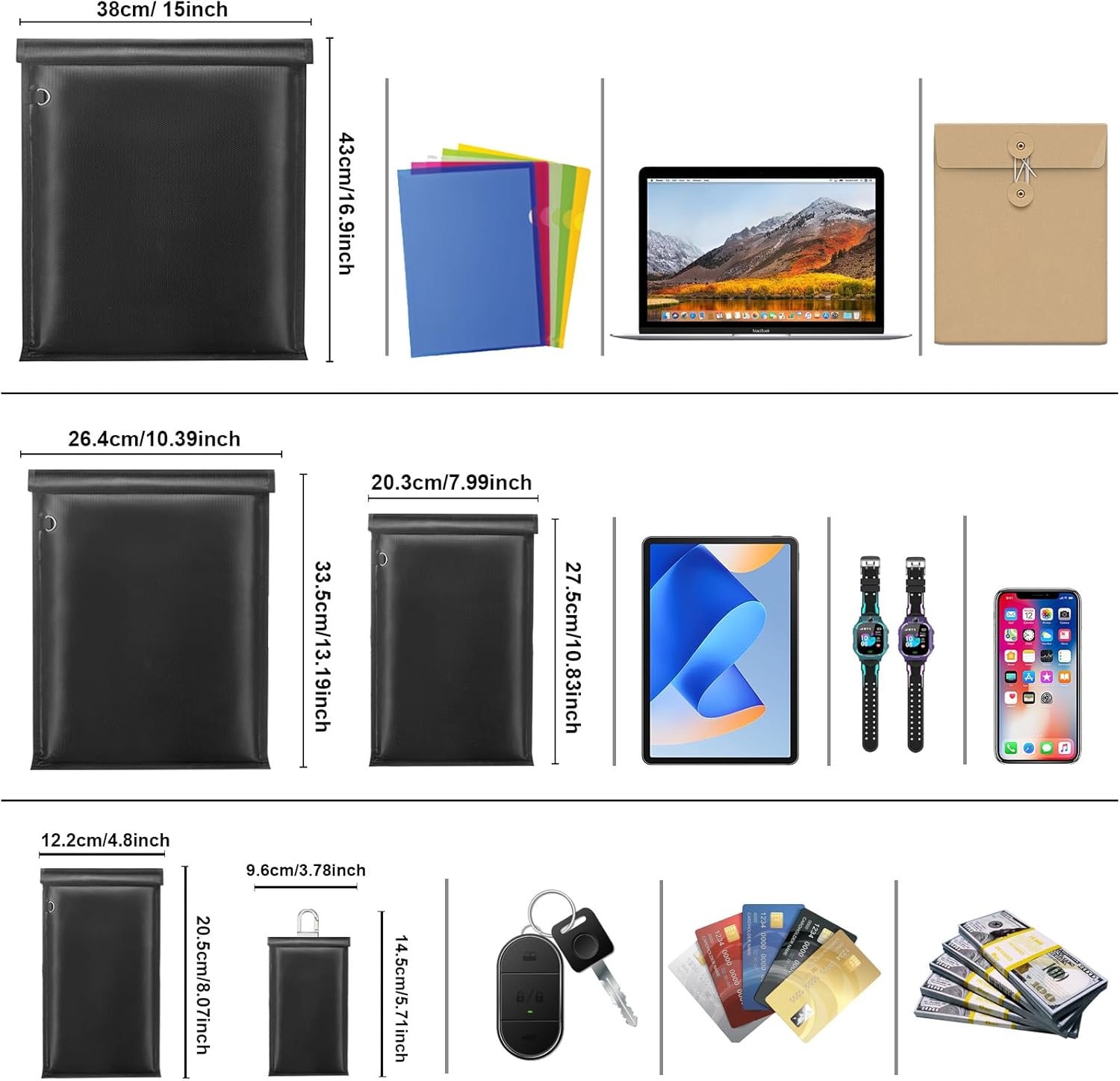
A multi-device Faraday kit is exactly what it sounds like: a bundle that includes different bag sizes in one purchase, so you can shield a key fob (tiny), a phone (medium), and a laptop or tablet (large) without mixing brands or signal-blocking materials that weren’t designed to work together.
Why does that last part matter? Because attenuation performance — measured in decibels (dB), where higher numbers mean more signal blocked — varies significantly by fabric grade and construction quality. A 40 dB bag blocks 99.99% of signal power. A 60 dB bag blocks 99.9999%. If your phone bag and your laptop bag are sourced from different manufacturers using different metallized fabrics, you have no reliable way to compare their protection levels. A matched kit solves this: one brand, one tested fabric spec, one certification to evaluate.
The FCC’s consumer guidance on radio frequency device operation notes that devices actively seeking a network signal will transmit at elevated power levels when shielded improperly — meaning a low-quality bag that partially blocks signal is in some ways worse than no bag, because the device keeps broadcasting at max power trying to punch through. A properly rated bag, by contrast, stops the conversation entirely.
The Three Device Categories You’re Shopping For
Before comparing kits, align on what you’re protecting:
-
Key fobs — these broadcast a low-power RFID or UHF signal that relay thieves can amplify from up to 30 feet away. Any bag rated above 50 dB at the relevant frequency (typically 315 MHz or 433 MHz) will stop this. The bag needs to be used, meaning the fob goes in before you set it near a door or window.
-
Smartphones — these run on cellular bands (600 MHz–6 GHz), Wi-Fi (2.4 and 5 GHz), Bluetooth (2.4 GHz), and GPS (1.575 GHz). A quality phone Faraday bag needs consistent attenuation across all of these. Look for bags rated across a broad frequency sweep, not just one band.
-
Laptops and tablets — larger surface area means larger bag, which means more fabric stress at the seams. Seam construction is where cheap laptop Faraday bags fail. Double-stitched or roll-top closures dramatically outperform simple zip pouches at this size.
The Numbers: What Attenuation Specs Tell You
| dB Rating | % of Signal Blocked | Practical Meaning |
|---|---|---|
| 40 dB | 99.99% | Adequate for key fobs, marginal for phones |
| 50 dB | 99.999% | Good for phones and tablets |
| 60 dB | 99.9999% | Forensic-grade; suitable for laptops with active threats |
| 80+ dB | 99.999999% | Law enforcement / evidence-grade; overkill for most households |
Mission Darkness product datasheets (2025 edition) publish frequency-sweep test data across their kit lines from 10 MHz up to 40 GHz — one of the more comprehensive published specs in the consumer segment. DefenderShield’s independent lab certification documentation (2024) covers similar sweep ranges and includes third-party verification from an accredited testing laboratory, which is the gold standard the site consistently recommends looking for.
Kits Worth Knowing About
These are the multi-device options that appear most consistently in sourced spec comparisons and aggregated owner reviews as of mid-2026. Prices reflect current market rates and should be verified at point of purchase.
Mission Darkness TitanRF Faraday Fabric Kit + Bag Bundle
Mission Darkness is probably the most-cited brand in both consumer and forensic-adjacent Faraday discussions. Their TitanRF fabric line — the same material used in their individual bags — is published at 60 dB attenuation across a wide frequency sweep per their 2025 datasheets. The bundle approach here involves purchasing their phone bag, a tablet or laptop bag, and a small RFID sleeve together; they market these as a coordinated kit and the fabric grade is consistent across sizes.
Who this is for: Privacy-focused households, travelers who want a phone-plus-laptop setup, and anyone who’s looked at their threat model and decided “partial protection isn’t protection.”
Where to buy:
Faraday Defense Multi-Device Kit
Faraday Defense publishes attenuation specs at 50+ dB across cellular and Wi-Fi bands per their 2025 specification sheets, with a kit configuration that includes phone, tablet, and key fob sizes. Owners in long-run aggregated reviews consistently highlight the roll-top closure on the larger bags as a durability improvement over older zipper-style designs. The brand lacks the same depth of third-party lab documentation as Mission Darkness or DefenderShield, which is worth noting if independent certification is a non-negotiable for you.
Who this is for: Households who want a coordinated kit at a mid-range price point and are primarily focused on key fob relay protection and phone privacy rather than forensic-level isolation.
Where to buy:
Silent Pocket Multi-Device Bundle
Silent Pocket’s manufacturer attenuation specs (2025) put their flagship fabric at -50 dB or greater across tested bands, with a product line that spans wallets, phone sleeves, and a larger laptop-oriented bag. Their design language is notably more consumer-facing than Mission Darkness — these look like regular tech accessories, not equipment pouches — which matters to design-conscious buyers.
Who this is for: Professionals who want Faraday protection that doesn’t signal “I am carrying classified equipment.” Also good for households where the barrier to actually using the bag is aesthetics — if it looks like a normal sleeve, family members are more likely to adopt the habit.
Where to buy:
DefenderShield Faraday Multi-Device Bundle
DefenderShield’s EMF shielding products are independently lab-certified — a point their 2024 certification documentation emphasizes — and their multi-device lineup covers phone, tablet, and laptop sizes. Attenuation specs are published across multiple frequency ranges. The brand is probably better known for laptop pads and pregnancy-adjacent products, but their bag line represents the same shielding approach. Price point lands at the higher end of the consumer segment.
Who this is for: Expectant parents who are already considering DefenderShield for other products and want consistent brand certification across their whole setup. Also for buyers for whom third-party lab documentation is a hard requirement, not a nice-to-have.
Where to buy:
What to Check Before You Buy (The Evaluation Checklist)
Even with named brands, apply this checklist before committing:
-
Published dB spec with frequency range: A rating of “60 dB” means nothing without knowing at what frequency. A bag that hits 60 dB at 900 MHz but 20 dB at 5 GHz (the Wi-Fi band) will let your laptop’s Wi-Fi radio right through. Mission Darkness and DefenderShield both publish sweep-based specs. If a product page only states a single dB number with no frequency context, treat it as unverified.
-
Third-party lab certification: Manufacturer self-testing is a yellow flag. An accredited third-party lab test — the kind DefenderShield includes in their 2024 documentation — is the honest gold standard. NIST’s Guidelines for the Secure Handling of Digital Evidence (Special Publication 800-101 Rev. 1) recommends verified Faraday containment for device forensics precisely because self-rated bags have historically failed in field use.
-
Closure construction at the target size: Roll-top or fold-and-seal closures consistently outperform simple zippers for laptop-sized bags in aggregated owner reports. The seam is the weak point. Ask the manufacturer directly if the closure system is the same on the large bag as on the small one — some brands downgrade construction at scale.
-
Return/test policy: A reputable Faraday bag brand should be comfortable with customers testing their bag using a simple “put your phone in, call the number” field check. If signal is still detectable, the bag failed. Brands that know their products perform well don’t discourage this.
The Decision Rule
Here’s the “if X, then Y” frame for this purchase:
If your primary concern is key fob relay theft and you want phone privacy as a secondary benefit, a mid-range kit from Faraday Defense or Silent Pocket at the 50 dB tier is proportionate. You don’t need forensic-grade fabric to stop a relay amplifier in a parking lot.
If you’re building a whole-household privacy setup — phone, laptop, key fobs, for multiple family members — match to Mission Darkness’s published fabric tier. The frequency-sweep documentation gives you something to stand on if the product is ever questioned, and the sizing range covers everything from a key fob to a 15-inch laptop.
If independent lab certification is a hard requirement (corporate policy, legal hold procedures, or you simply won’t compromise on documented proof), DefenderShield’s certified documentation makes them the defensible choice regardless of price. The NIST Special Publication 800-101 Rev. 1 framework effectively requires this level of documentation for evidence-handling contexts — that’s the bar to clear.
If aesthetics or family adoption is the bottleneck, Silent Pocket’s consumer-facing design is the practical answer. A Faraday bag that lives in a drawer because it looks strange is providing zero attenuation.
The multi-device kit format makes sense for almost everyone in this purchase category — the alternative is sourcing three bags from three brands with three different fabric grades and no unified spec to evaluate. One kit, one standard, one certification to verify. That’s the efficiency the format is built to deliver.