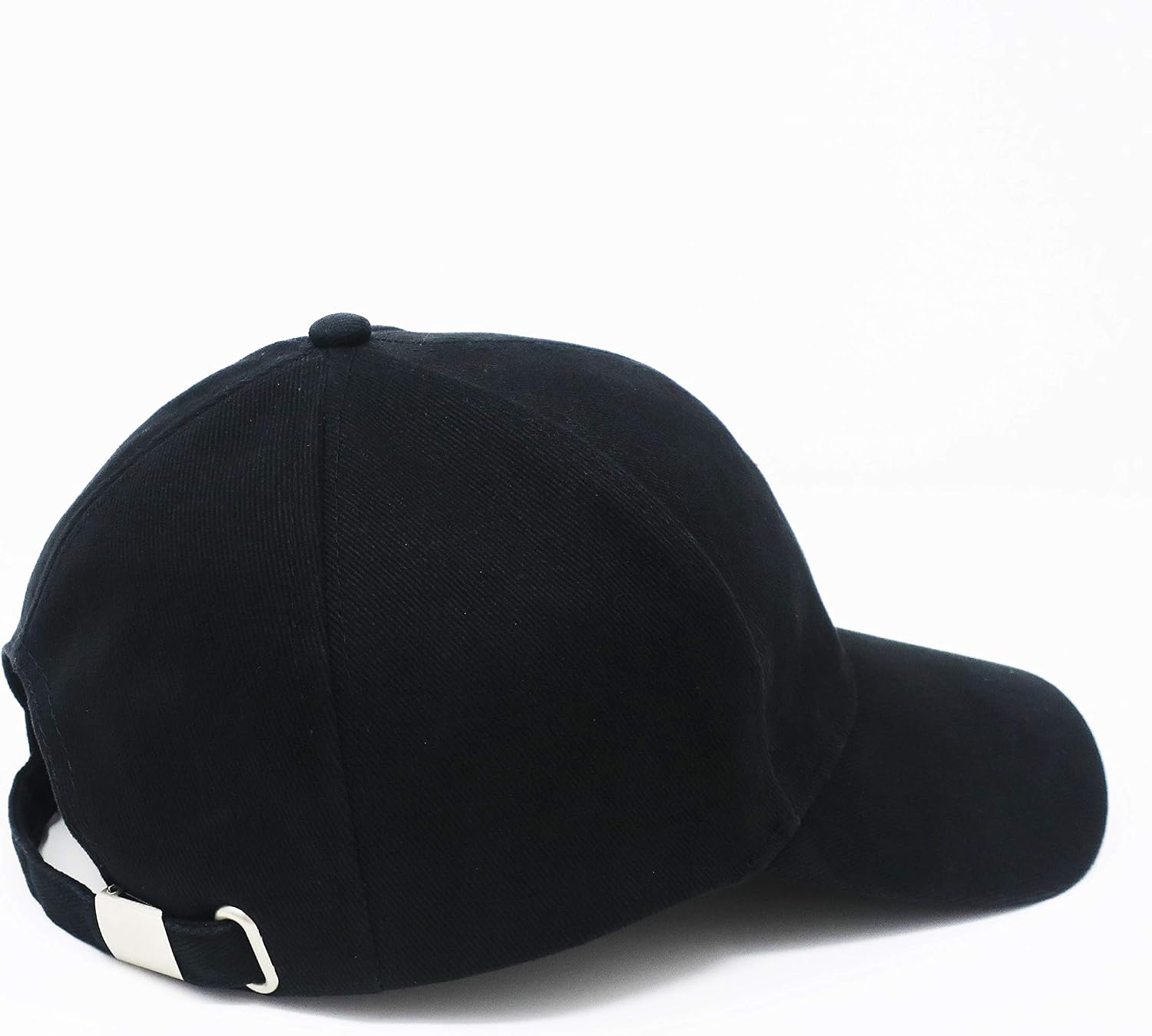
If you’ve ever looked up “EMF-blocking hat” and come away more confused than when you started, you’re not alone. EMF stands for electromagnetic field — the invisible energy that radiates from cell towers, Wi-Fi routers, and the phone in your pocket. A small and growing category of wearable products claims to reduce how much of that energy reaches your head by weaving conductive metal fibers — usually silver — directly into fabric. The idea is the same principle behind a Faraday cage (a metal enclosure that blocks radio waves), just stitched into a beanie or a hoodie. This article is not here to hype that idea or dismiss it. It’s here to show you exactly what the published specifications say, where the independent evidence is strong, where it gets murky, and how to make a sensible buying decision if you’re genuinely interested.
How Silver-Fiber Shielding Works — and Why Head Coverage Is Complicated
Silver is an excellent electrical conductor. When fine silver fibers are knitted into fabric at a high enough density, the resulting textile can reflect or absorb incoming radio-frequency (RF) energy rather than letting it pass through. Manufacturers publish a figure called attenuation — measured in decibels (dB) — to describe how much signal the fabric blocks. A 20 dB rating means the fabric reduces RF energy to 1% of its original level. A 30 dB rating reduces it to 0.1%. Every 10 dB is a tenfold reduction, so these numbers matter enormously.
Here is where head-shielding products get complicated compared to, say, a flat laptop shield or a phone pouch. A rectangle of RF-blocking fabric lying flat on a test bench can be measured in a controlled way under consistent conditions. A beanie sitting on a human head is not a closed enclosure. RF energy — especially from omnidirectional sources like cell towers — arrives from multiple angles simultaneously. A hat that attenuates 30 dB of signal coming straight down from above may offer meaningfully less protection from signals arriving horizontally, because the fabric does not wrap around the ears, neck, or face.
The Building Biology Institute’s Standard of Building Biology Testing Methods (SBM-2015) notes this geometry problem explicitly when discussing partial-enclosure shielding: a partial shield can still reduce exposure from dominant sources, but its real-world performance will always be lower than the flat-fabric dB spec printed on the box. That gap between spec-sheet performance and on-body performance is the central thing to understand before spending any money in this category.
What the Published Specs Actually Show
Most silver-fiber head-shielding products on the market in mid-2026 draw from a small set of underlying fabric types. Less EMF Inc., one of the longest-running specialty retailers in the U.S., publishes fabric-level attenuation data on its product pages — a level of transparency that is worth noting, because not every brand does this.
By the numbers — representative fabric specs (flat-panel measurements):
| Fabric type | Silver content | Freq. range tested | Attenuation (flat panel) |
|---|---|---|---|
| Silver-knit jersey (~25% Ag) | ~25% silver fiber | 1 MHz – 3 GHz | 25–35 dB |
| Silver mesh stretch knit | ~15–20% silver fiber | 900 MHz – 2.4 GHz | 20–30 dB |
| Silver-lined beanie / cap shells | varies by brand | 900 MHz – 3 GHz | 15–25 dB (manufacturer-claimed) |
| Full balaclava / hood designs | ~25–30% silver fiber | 900 MHz – 5 GHz | 25–40 dB (flat panel) |
Flat-panel figures are from manufacturer datasheets and third-party fabric retailers including Less EMF Inc. On-body performance is consistently lower; see explanation above.
A 2021 peer-reviewed study published in Radiation Protection Dosimetry (indexed on NCBI/National Library of Medicine under the title “Shielding Effectiveness of Various Materials for EMF Protection Garments”) measured actual on-body attenuation of silver-fiber garments and found real-world reduction ranging from 15 to 50% of the flat-panel spec, depending on source direction, frequency, and garment fit. That’s a significant haircut. It doesn’t mean the garments do nothing — it means the headline dB figure is a ceiling, not a guarantee.
The Certification Gap: What to Look for and What to Be Skeptical Of
This is where the honest review gets a little uncomfortable, because the head-shielding category has a transparency problem.
What good certification looks like: A trustworthy product will reference testing by an accredited third-party EMC (electromagnetic compatibility) lab — ideally one certified to ISO 17025. The test report should specify the frequency range, the measurement method (e.g., ASTM D4935 for flat-panel shielding effectiveness), and the date. Products that publish full third-party lab reports are rare but they exist; DefenderShield, for example, publishes independent lab data for its flat shields and device-enclosure products.
What is common instead: Many silver-fiber hat and hood products on the market cite only manufacturer-conducted testing, or they reference the fabric supplier’s data without clarifying whether the final garment was tested in its sewn, wearable configuration. The FCC’s RF Safety FAQ notes that it does not certify or evaluate consumer shielding garments — so there is no regulatory backstop requiring these products to prove their claims before sale.
Red flags worth knowing:
- No dB spec published anywhere (not even on the manufacturer’s website)
- No indication of which frequency range was tested — 900 MHz performance is very different from 5 GHz performance
- Claims of “100% shielding” or “complete protection” — physical enclosures with no gaps cannot achieve this; a garment certainly cannot
- No reference to any third-party lab, named by name
The Building Biology Institute and its trained practitioners (Building Biology Consultants) use the SBM-2015 standard as a framework for evaluating RF exposure and shielding — if you are working with one of these consultants, they can measure pre- and post-shielding RF levels with a calibrated meter, which is the most honest way to verify real-world performance of any garment.
Who These Products Are Actually For — and Honest Tradeoffs
Let’s be direct: silver-fiber head-shielding products occupy an unusual space. The World Health Organization’s fact sheet on mobile phones and electromagnetic fields notes that the balance of current evidence does not establish health harm from RF exposure at levels below international guidelines, but also acknowledges that research is ongoing. The WHO does not recommend shielding garments, but it also does not categorize normal RF exposure as an established danger — a distinction worth holding onto when reading marketing copy in either direction.
So who does this category genuinely serve?
Electrosensitivity and symptom management. Some individuals report symptoms — headaches, concentration issues, sleep disruption — that they associate with RF exposure. Whether the biological mechanism is established or not, the personal experience is real for these people. For this audience, a product that measurably reduces RF levels reaching the head (even partially) may provide meaningful relief. The honest trade is: you are buying partial reduction, not elimination, and real-world performance will be lower than the spec sheet.
Precautionary parents and pregnancy. Expectant parents researching precautionary steps will find the same silver-fiber fabrics used in maternity belly bands also available in head/neck coverage. The precautionary logic here is consistent: if you are already taking steps to reduce RF exposure, head coverage extends that approach. Buyers in this segment should apply the same certification checklist — ask for third-party dB data at the specific frequencies (900 MHz, 1.8 GHz, 2.4 GHz, 5 GHz) that match the devices in their environment.
Privacy and signal-blocking applications. A full balaclava or hood made from a higher-density silver fabric can meaningfully reduce RF signals to and from devices near the head in signal-blocking scenarios — though purpose-built Faraday bags for devices are a more reliable solution for forensic or privacy-critical applications.
The tradeoff table, stated plainly:
- Higher silver content → better attenuation, higher cost, less breathability, potential skin sensitivity for some wearers
- Looser knit / stretch fit → more comfortable, lower attenuation, larger gaps at edges
- Full balaclava / hood design → better geometry coverage than a hat alone, more polarizing aesthetics
- Hat-only designs → easiest to wear daily, most geometry gaps, lowest real-world performance
How to Shop This Category Without Regret
If you’re going to spend $40–$120 on a silver-fiber head-shielding product, here is the decision framework based on published evidence:
Step 1: Demand the dB spec, in writing, for the frequency you care about. If the brand cannot tell you the attenuation at 2.4 GHz or 5 GHz (the frequencies of modern Wi-Fi), that is a meaningful omission. Less EMF Inc. and a small number of other specialty retailers publish this data; use those publications as your benchmark.
Step 2: Ask whether the garment was tested — or only the fabric. Fabric tested flat on a bench and fabric sewn into a hat are different things. Prefer brands that test the finished product.
Step 3: Match the garment geometry to your dominant exposure direction. If your primary concern is a cell tower to your south, a hat with no ear or neck coverage leaves significant angles unaddressed. A full hood or balaclava design offers better geometry. Neither is a closed enclosure.
Step 4: Apply the certification checklist. ISO 17025 lab name + report date + specific frequency range = trustworthy. “Tested for shielding effectiveness” with no further detail = insufficient.
Step 5: Use the if-X-then-Y rule:
- If your primary goal is measurable RF reduction with documented specs and you can verify third-party lab data → look for higher silver-content fabrics (25%+) with published reports from named labs.
- If your primary goal is precautionary daily wear and comfort matters as much as performance → a mid-range silver-knit beanie from a transparent retailer like Less EMF Inc. is a reasonable starting point at a lower price.
- If you want the strongest geometry coverage available in a wearable format → a full balaclava or integrated hood design (higher silver content, third-party tested) is the logical choice, accepting the comfort and aesthetic tradeoffs.
- If a product has no published dB spec and no named third-party lab → pass, regardless of price.
The underlying science of silver-fiber shielding is real. The flat-panel attenuation numbers are real. The gap between those numbers and what happens on an actual human head in a real RF environment is also real. The best purchase is the one made with all three of those facts in view.